

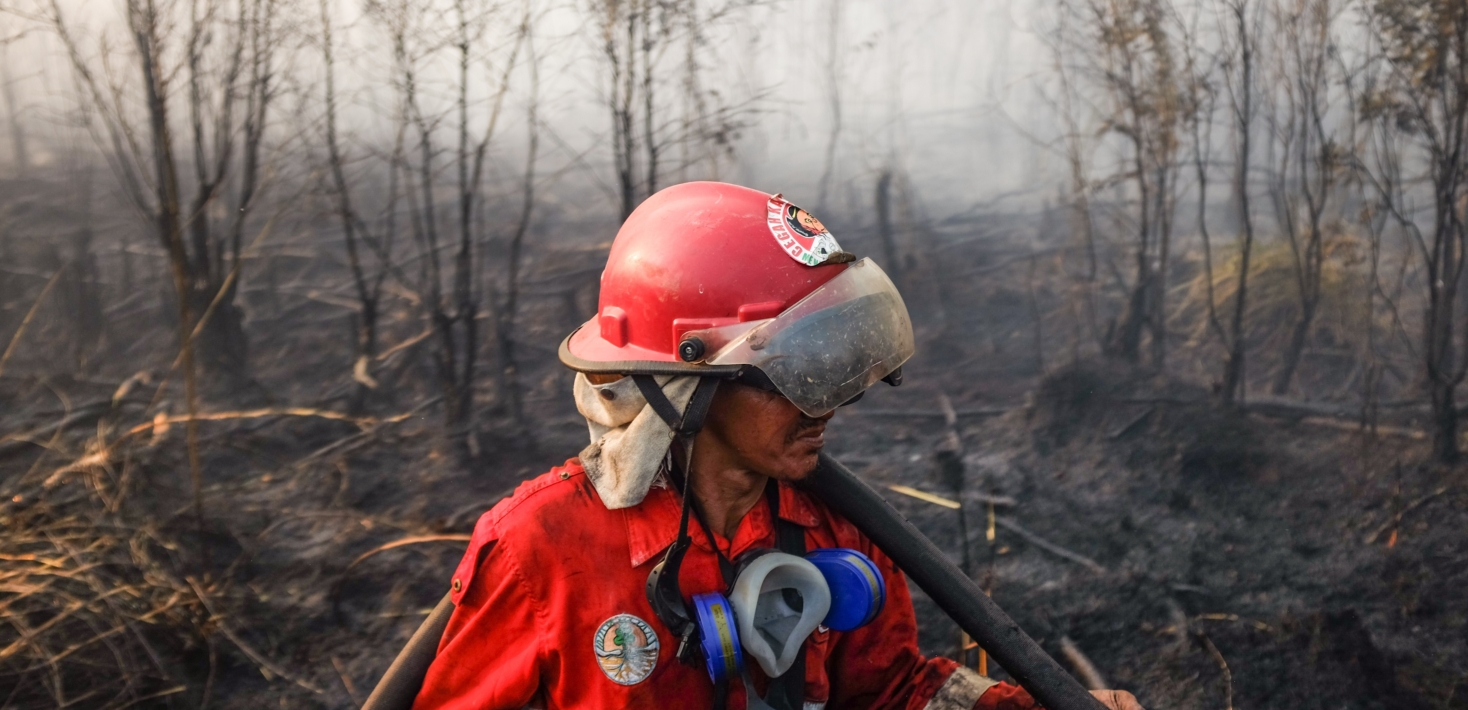


Responding to the recent wildfires in the islands of Sumatra and Kalimantan that have sent haze to neighbouring Malaysia, Amnesty International Indonesia’s executive director Usman Hamid said:
“The fires have ignited a severe environmental and human rights crisis in Indonesia and sent haze to neighbouring Malaysia after engulfing thousands of hectares of land in Kalimantan and Sumatra. Beyond the ecological destruction, this disaster poses profound threats to human rights, particularly the right to health and the right to a healthy environment. The wildfires also threaten Indigenous lands and livelihoods, and access to education for children.
“The immediate human toll of this crisis is devastating. Toxic haze is choking local communities and directly threatening public health, with health facilities in West Kalimantan recording around 5,000 emergency room visits for respiratory infections each week since July. It has also claimed at least one life.
“Haze continues to affect daily life, causing road accidents due to low visibility. This catastrophe demands decisive and urgent intervention. We call on the Indonesian government to address the structural drivers that continue to increase the risk and severity of wildfires, including unsustainable land use practices, environmental degradation, and the impacts of climate change. This requires a commitment to phasing out fossil fuels, transforming the current model of industrial agriculture, including large-scale palm oil cultivation, and ensuring strict legal consequences for illegitimate land use.
Only through resolute action can we protect the region’s people and safeguard our shared global climate. At the same time, these fires are being turbo-charged by El Nino, and the government can take action now to protect lives, such as providing increased support to the health infrastructure in the impacted areas, announcing temporary closure of schools, investing in fire prevention and firefighting and establishing robust evacuation plans for the impacted communities.”
Amnesty International Malaysia’s spokesperson Divya Shesshsan Balakrishnan said:
“The impacts of these fires do not stop at national borders. With haze once again affecting people across the region, including in Malaysia, where it has forced school closures, governments must strengthen cooperation to address the root causes of recurring fires and hold those responsible to account. Climate-related disasters are becoming more frequent and severe, making it imperative that states place human rights at the centre of both emergency response and long-term climate policies.
“As an affected country, Malaysia has an important role to play as part of a regional response. As Malaysia considers new climate legislation, including the proposed National Climate Change Bill, this is an important opportunity for Malaysia to strengthen climate governance and resilience while ensuring that the rights and needs of affected communities are protected. Addressing transboundary haze and climate-related harms requires coordinated action that goes beyond crisis management and tackles the underlying drivers of environmental degradation.”
Background
Massive wildfires in Indonesia have returned as a result of prolonged dry weather, environmental degradation, and “super” El Niño conditions. According to media reports, the fires have already scorched thousands of hectares of land in Kalimantan and Sumatra, generating a thick transboundary haze that has crossed borders into Malaysia and raised serious air quality and health concerns, closing 591 schools temporarily in Sarawak.
On 4 August, a resident in West Kalimantan died after becoming trapped by the encroaching flames and smoke.
In Singapore, the National Environment Agency on 17 August warned that the country could experience hazy conditions if wildfires in Indonesia intensify.