



As ASEAN leaders prepare to meet in Manila for the 49th ASEAN Summit, any engagement with Myanmar and its former junta chief Min Aung Hlaing must not undermine accountability for grave and ongoing human rights violations or encourage the military leadership to continue widespread and systematic abuses, Amnesty International said today.
As host of the 49th ASEAN Summit (15-18 November), the Philippines should demonstrate principled leadership on Myanmar alongside other ASEAN member states. Regional leaders should make clear that discussions involving Myanmar’s authorities are focused on urging them to end human rights violations, protect civilians and advance justice, truth and accountability.
Almost six years after the military coup, Myanmar remains in the grip of one of the region’s most acute human rights and humanitarian crises. The military continues to carry out unlawful attacks on civilians, including air strikes on villages, schools, religious sites and marketplaces, while arbitrary arrests, torture, enforced disappearances and other serious violations remain widespread. More than 3 million people have been internally displaced since the coup and millions more require humanitarian assistance. An estimated 1.3 million Rohingya refugees from Myanmar now live in Bangladesh, while many of their former homes and villages have been destroyed.
For a decade, Min Aung Hlaing has been at the centre of Myanmar’s human rights crises. A former head of the armed forces who stage-managed elections that saw him controversially elected president earlier this year, Min Aung Hlaing oversaw the military’s 2017 operations against the Rohingya population, which forced more than 700,000 people to flee to Bangladesh. Amnesty International concluded that these operations amounted to crimes against humanity, while UN investigators found there was sufficient evidence to warrant investigations in addition for war crimes and genocide.
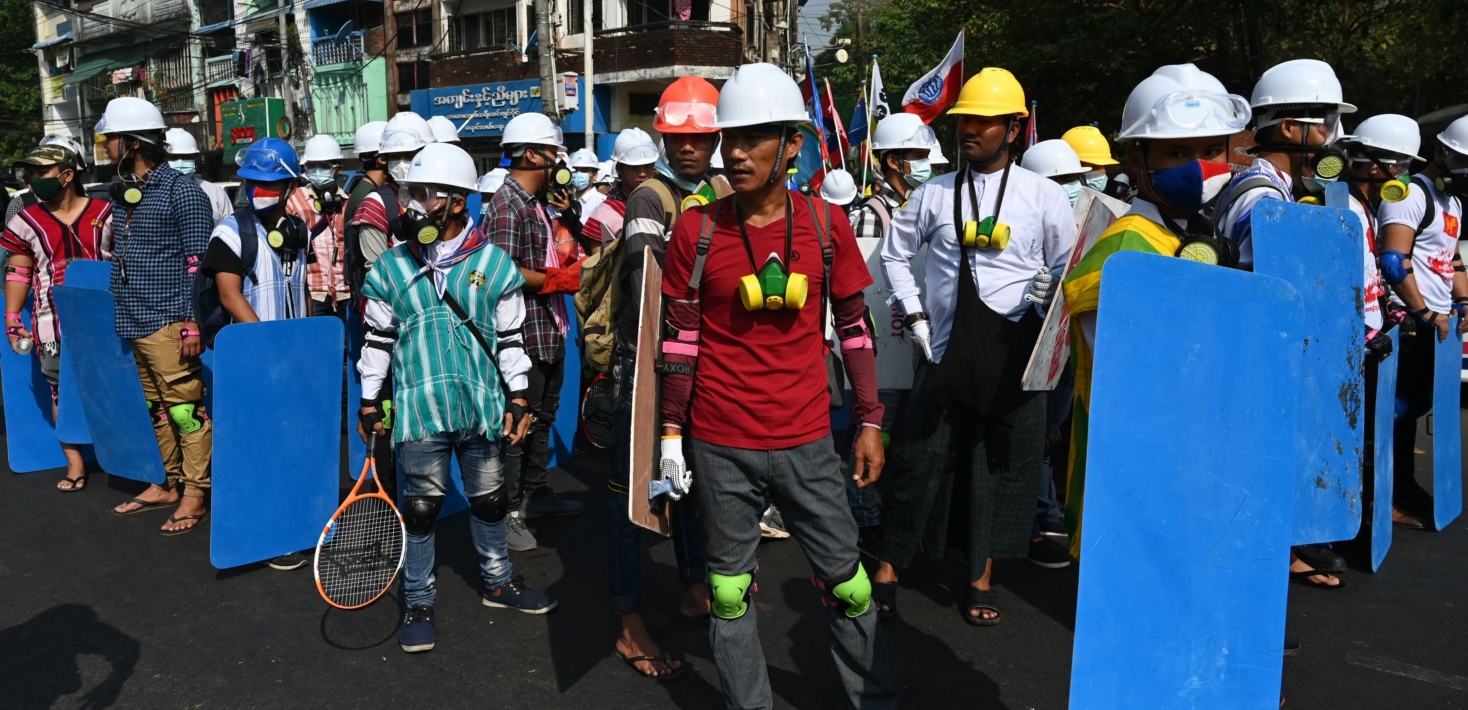
Since the February 2021 coup, the military has intensified its attacks on civilians across Myanmar. Under Min Aung Hlaing’s leadership, military forces have repeatedly targeted civilians, civilian areas and infrastructure, deepening suffering across the country. Nothing has changed substantially since a parliament stacked with junta loyalists elected him president in April. Most recently, reports indicated that an air strike on a marketplace in Rakhine State in September killed at least 50 people, many of them civilians, and injured scores more. Recent days have seen air strikes hitting a hospital and a school in Western Rakhine, in one case killing a newborn in a maternity ward.
Against this horrifying backdrop, ASEAN governments should avoid actions that risk emboldening Myanmar’s military leadership, weakening pressure for accountability or implying that the human rights situation has stabilized. The Myanmar military’s ongoing campaign of violations following engineered elections demonstrates that conditions do not exist for a return to business as usual. Any engagement should be tied to clear and measurable human rights benchmarks, including an end to attacks on civilians, the release of those arbitrarily detained, unhindered humanitarian access and meaningful engagement with stakeholders beyond the military authorities. ASEAN’s moribund Five-Point consensus on Myanmar must be revisited and strengthened to comply with such benchmarks.
The upcoming Summit takes place at a significant moment for international accountability efforts. In November 2024, the Prosecutor of the International Criminal Court requested an arrest warrant for Min Aung Hlaing and other unnamed Myanmar officials for crimes against humanity against the Rohingya population. A judgment from the International Court of Justice (ICJ) in the Rohingya genocide case on 19 November will also have important implications for the international community’s engagement with Myanmar.
The situation in Myanmar emphasizes the need to strengthen international mechanisms to prevent and punish crimes against humanity. While war crimes, apartheid, torture and other crimes under international law are governed by dedicated international treaties, including in the case of genocide, there remains no stand-alone global convention on crimes against humanity. Considering this, ASEAN states should support ongoing efforts at the United Nations to negotiate and adopt an effective Crimes Against Humanity Convention. Such a treaty would strengthen state-to-state cooperation in investigating, detaining and prosecuting suspected perpetrators, improve support and access to justice for victims and survivors and help close significant gaps in the international legal framework. The widespread and systematic attacks against civilians in Myanmar demonstrate why stronger international tools are urgently needed to combat impunity.
ASEAN member states should also support international accountability efforts relating to Myanmar, including cooperation with the International Criminal Court and other international mechanisms, while ensuring that refugees and asylum seekers fleeing persecution are protected and not returned to situations where they are at real risk of facing serious human rights abuses.
As leaders gather in Manila, they face a choice between supporting the military’s efforts to gain legitimacy, normalizing the military’s repression in Myanmar, and tacitly tolerating its crimes under international law; or placing human rights, accountability and the protection of civilians at the forefront of ASEAN’s response. Stability, respect for a rules-based order, and inclusive, people-centred and sustainable development in Myanmar, and the region, will remain absent unless key conditions are met. Those responsible for crimes under international law should be held to account; the international requirement to resolve disputes by peaceful means adhered to; and the rights of all people in Myanmar respected and protected.