

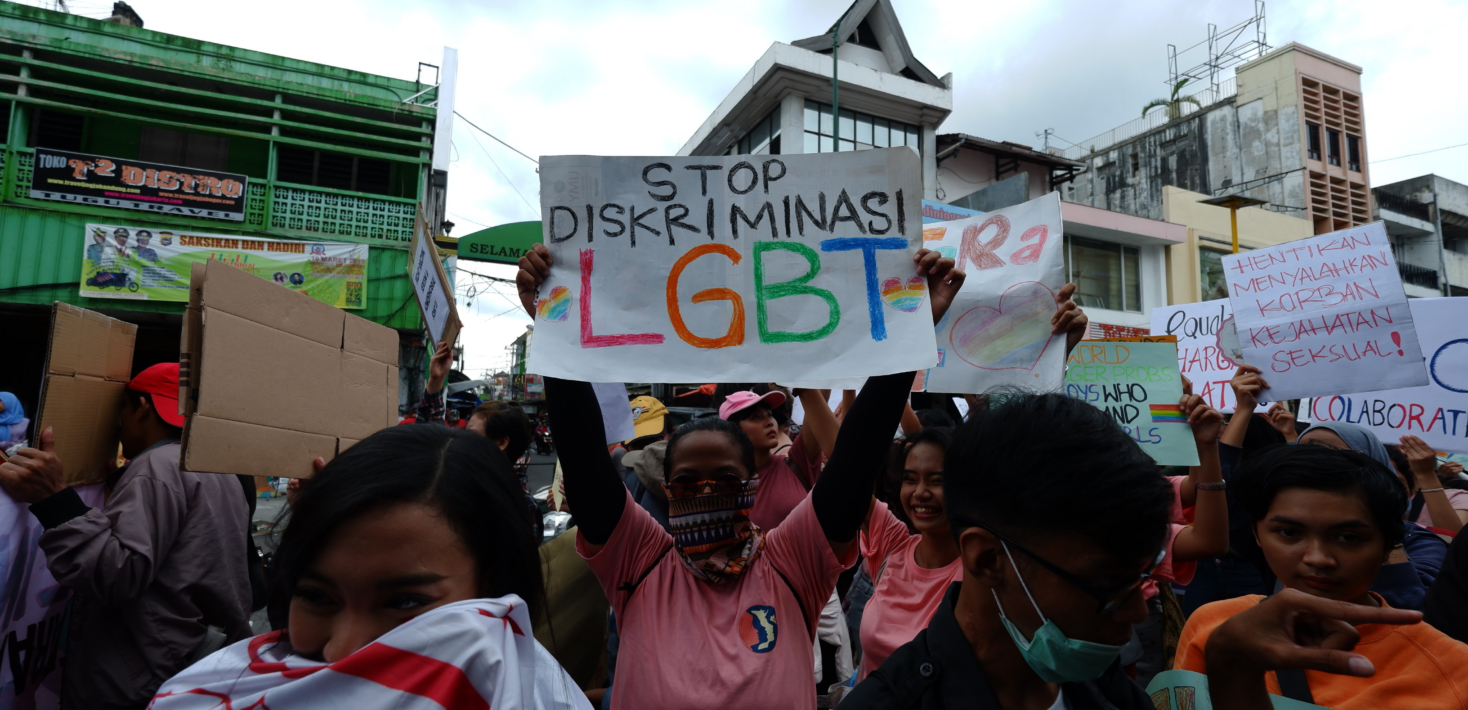


Responding to recent backlash against online expression of LGBTQI+, which derived from the Presidential Regulation on General Policy for National Defense, which classifies the spread of LGBTQI+ culture as a non-military threat to the state, Amnesty International Indonesia’s executive director Usman Hamid says:
“We express our profound concern regarding Indonesia’s Presidential Regulation No. 111 of 2025 on General Policy for National Defense. By classifying the spread of LGBTQI+ culture as a non-military threat to the state and placing it within the same category as terrorism, separatism and radicalism, this regulation institutionalizes systematic discrimination against already marginalized people.
“Such legal frameworks violate human rights and foster an environment where LGBTQI+ persons are highly susceptible to immediate threat, discrimination and harassment by both state and non-state actors. Numerous discriminatory incidents targeting LGBTQI+ persons have resulted in physical, psychological and other forms of harm. This hostile environment further intensifies violence against marginalized persons.
“Besides immediate threat towards LGBTQI+ persons, the hostile environment also leads to a chilling effect which is evident in the suppression of freedom of expression and academic freedom. The recent backlash against the Student Executive Board (BEM) of the Faculty of Psychology at the Universitas Indonesia is an example of this. Sharing scientifically backed information, such as the American Psychological Association’s consensus that homosexuality is not a mental disorder, is a fundamental exercise of free speech, not a threat to national security. The forced removal of this post, compounded by statements of support for the regulation from lawmakers and influential organizations like the Indonesian Ulema Council, sets a dangerous precedent for censorship.
“Furthermore, the recent intimidation, doxxing and stalking of student journalists at Universitas Indonesia by unknown persons for publishing content related to Pride Month last month underscores the severe physical and psychological risks created by this hostile climate.
“Amnesty International Indonesia unequivocally condemns these attacks and intimidation by both state and non-state actors based on perceived sexual orientation or gender identity. We urgently call upon the Indonesian government to repeal this regulation and uphold its constitutional mandates and the international human rights treaties it has ratified.”
Authorities must take immediate action to protect LGBTQI+ persons from hate speech, threats, and violence. It is the state’s duty to ensure that all citizens can exercise their basic rights in a safe, enabling environment, free from harassment and fear.”
Background
Indonesian media outlets on 5 July widely reported on Presidential Regulation No. 111 of 2025 concerning the 2025-2029 General Policy for National Defense, which classifies the spread of LGBTQI+ culture as a non-military threat to the state. The regulation places it alongside other perceived threats, including the dissemination of prohibited ideologies, the erosion of nationalism, and the spread of atheism, separatism, terrorism, and radicalism.
Although Indonesian President Prabowo Subianto signed the regulation on 24 October 2025, renewed public attention to the decree was triggered by critics from the country’s influential Islamic scholar organization (MUI) and lawmakers against a social media post from the Student Executive Board (BEM) of the Faculty of Psychology at the University of Indonesia. Citing the American Psychological Association (APA) 2008 consensus, the post stated that there is no scientific evidence supporting the view that homosexuality is a mental disorder or a form of deviance.
The post was subsequently removed from the student body’s Instagram account. However, screenshots had already circulated widely online and were reposted by numerous social media accounts, prompting widespread public debate.
On 4 July, the Indonesian Ulema Council, one of Indonesia’s most influential Islamic organizations, criticized the post on its official website. The following day, the official website of Indonesia’s House of Representatives published comments from several lawmakers who also criticized the post and voiced support for Presidential Regulation No. 111 of 2025, including its classification of the spread of LGBTQI+ culture as a non-military threat.
The controversy follows reports that several student journalists at the University of Indonesia faced intimidation after publishing content related to Pride Month, sexual orientation and gender identity through their student media outlet, Suara Mahasiswa (“Voice of Students”), in June. According to media reports, the students said they were subjected to intimidation, doxxing and stalking from unknown persons following the publication.
Article 26 of the ICCPR, which has been ratified by Indonesia through Law No. 12 of 2005 states that all people are equal before the law and must be protected from all forms of discrimination based on race, color, sex, language, religion, political opinion, origin or other status.